

STRONG:40+ · Part 1 of 3
The science of strength training for women over 40
Muscle, bone and metabolism all shift in your forties. The research on what reverses it is clearer than most women have been told, and it points straight at the barbell.
If you’re a woman in your forties, fifties or sixties, you’ve probably been told to stay active. Walk more. Try pilates. Don’t overdo it. All of that is fine, and none of it is the whole story.
Somewhere in your forties the body quietly changes the rules. Muscle gets harder to keep. Bone starts to thin, and through menopause it thins faster. Energy, sleep and body shape shift in ways that don’t always respond to what used to work. The research on what slows that down, and in some cases turns it around, is not vague and it is not new. It points, fairly consistently, at strength training.
This is Part 1 of a three part series written for women thinking about STRONG:40+, our new small group strength program for women 40 to 65 in Randwick. Part 1 is the why. Parts 2 and 3 are the how.
Strength training is the most effective tool we have for protecting muscle, bone and metabolic health after 40. Two or more sessions a week of progressively heavier lifting rebuilds strength at any age, can slow or stop bone loss through menopause, and is linked to a longer, more independent life.
| What the research found | The number | Source |
|---|---|---|
| Muscle adults lose each decade from about age 30 | 3 to 8 percent | Volpi et al., 2004 |
| Fastest bone loss at the spine, around the final period | About 2.5 percent a year | SWAN, 2012 |
| Higher risk of death for every 5kg drop in grip strength | 16 percent | PURE study, The Lancet, 2015 |
| Lower risk of early death with regular muscle strengthening | 10 to 17 percent | British Journal of Sports Medicine, 2022 |
| Leg strength gained by adults aged 86 to 96 in eight weeks | 174 percent | JAMA, 1990 |
| Spine bone density after eight months of supervised heavy lifting, postmenopausal women with low bone mass | Up 2.9 percent, while the home exercise group lost 1.2 percent | LIFTMOR trial, 2018 |
What actually changes in your body after 40?
Three things, mostly, and they stack on top of each other.
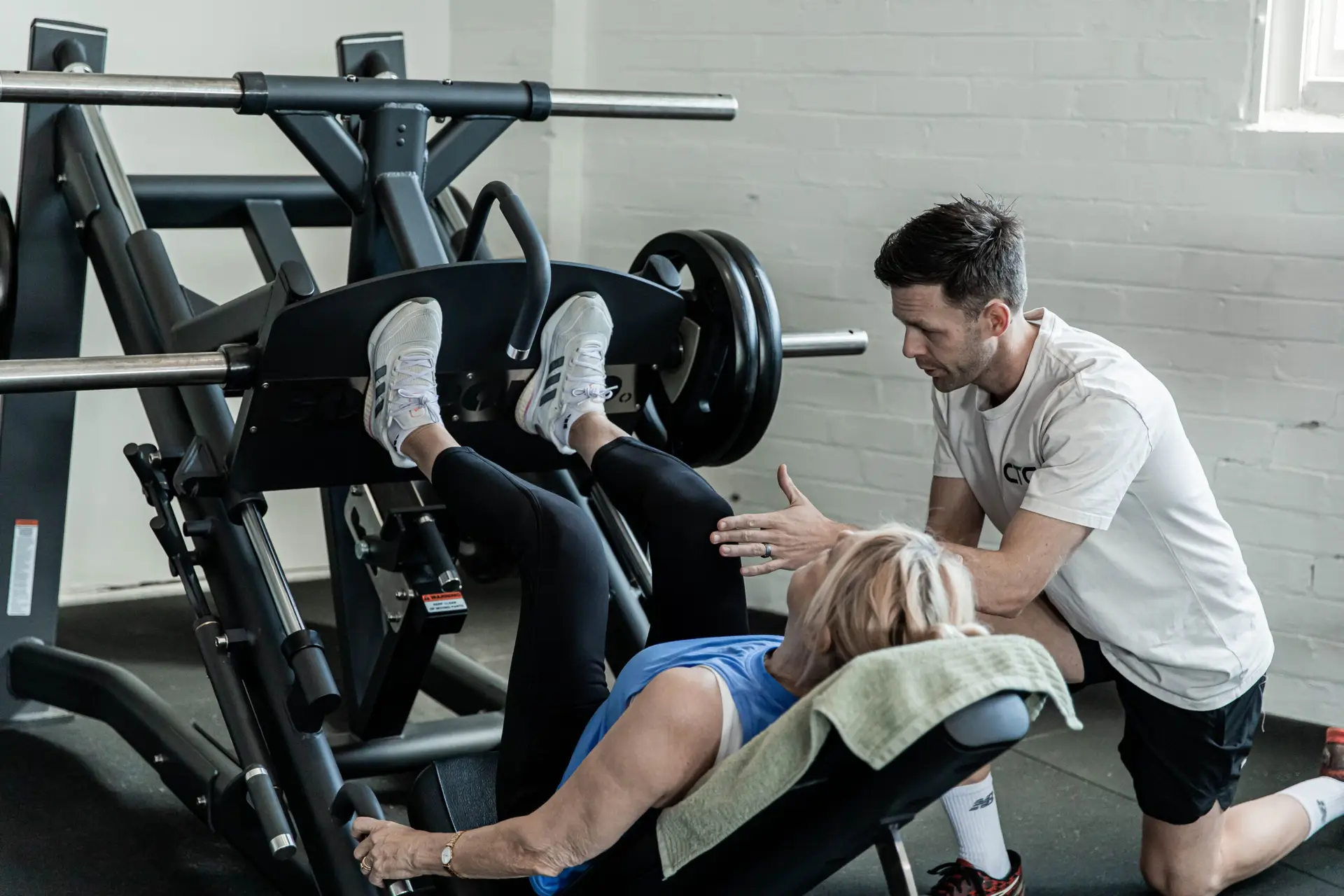
You lose muscle. From about 30, adults lose roughly 3 to 8 percent of their muscle mass each decade, and the rate picks up after 60. It happens slowly enough that you don’t notice it year to year. You notice it the day the suitcase feels heavier than it should, or getting up off the floor needs a hand on the couch.
The muscle you have responds less. Ageing muscle becomes less sensitive to the signals that build it, from training and from protein. Researchers call it anabolic resistance. It doesn’t mean you can’t build muscle. It means the gentle stimulus that worked at 30 often isn’t enough at 50. The body needs a clearer reason to change.
Bone loss speeds up through menopause. Oestrogen protects bone, so when it falls, bone goes with it. The Study of Women’s Health Across the Nation, which followed a large group of women through the transition, found the fastest loss runs from about a year before the final period to two years after, at around 2.5 percent a year at the spine. Across that whole six year window, the average loss at the lumbar spine is roughly 10 percent.
None of this is a lack of effort or willpower. It’s biology. But biology responds to what you ask of it, and that’s the useful part.
Why does muscle matter more than the number on the scales?
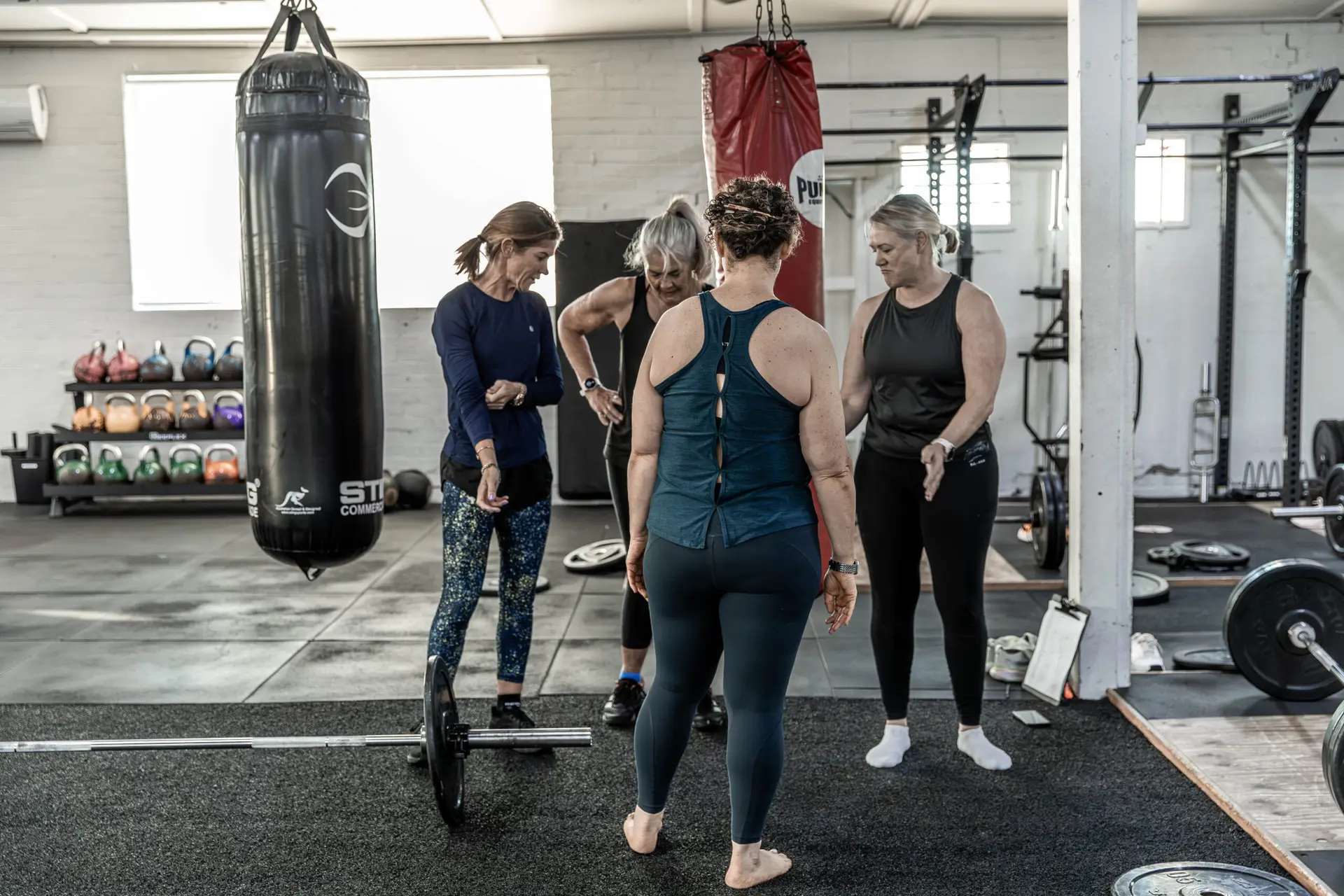
Muscle isn’t only about how you look. It’s the tissue that does most of the work of clearing sugar from your blood after a meal, it keeps your metabolism ticking over, and it’s what gets you up the stairs, carries the shopping and catches you when you trip. Losing it quietly makes every one of those things harder.
The research linking strength to a long life is hard to ignore. The PURE study, published in The Lancet in 2015, followed almost 140,000 adults across 17 countries. Every 5kg drop in grip strength was linked to a 16 percent higher risk of dying from any cause, and grip strength predicted death more strongly than blood pressure did.
Grip isn’t magic on its own. It’s a simple window into how strong you are overall. And the evidence runs the other way too. A 2022 review in the British Journal of Sports Medicine pooled 16 studies and found that people who did regular muscle strengthening activity had a 10 to 17 percent lower risk of dying early, along with lower rates of heart disease, cancer and diabetes. The biggest benefit showed up at around 30 to 60 minutes a week.
These are associations, not guarantees. But they line up with what the training trials show, and the dose is two good sessions a week, not a second job.
Can you really build muscle after 40?
Yes. The ability to build muscle and strength doesn’t switch off with age. It asks for a bit more intent, meaning heavier and more progressive work, but the body still responds, and people who start later often see the biggest early gains.
The study that settled the question is from 1990. Researchers put ten frail nursing home residents, aged 86 to 96, on eight weeks of heavy leg strength training. Strength rose by an average of 174 percent. Thigh muscle size grew by 9 percent. Their walking speed on a balance test improved by 48 percent.
If people in their nineties can more than double their leg strength in two months, a woman of 48 who has simply never been shown how to lift is not starting from behind. She is starting from a very good place.
The catch is anabolic resistance. Light, comfortable weights you could lift thirty times don’t give ageing muscle much reason to adapt. The weights need to become genuinely challenging over time, which happens to be the exact thing most women over 40 have been told to avoid.
What does lifting weights do for bone density?
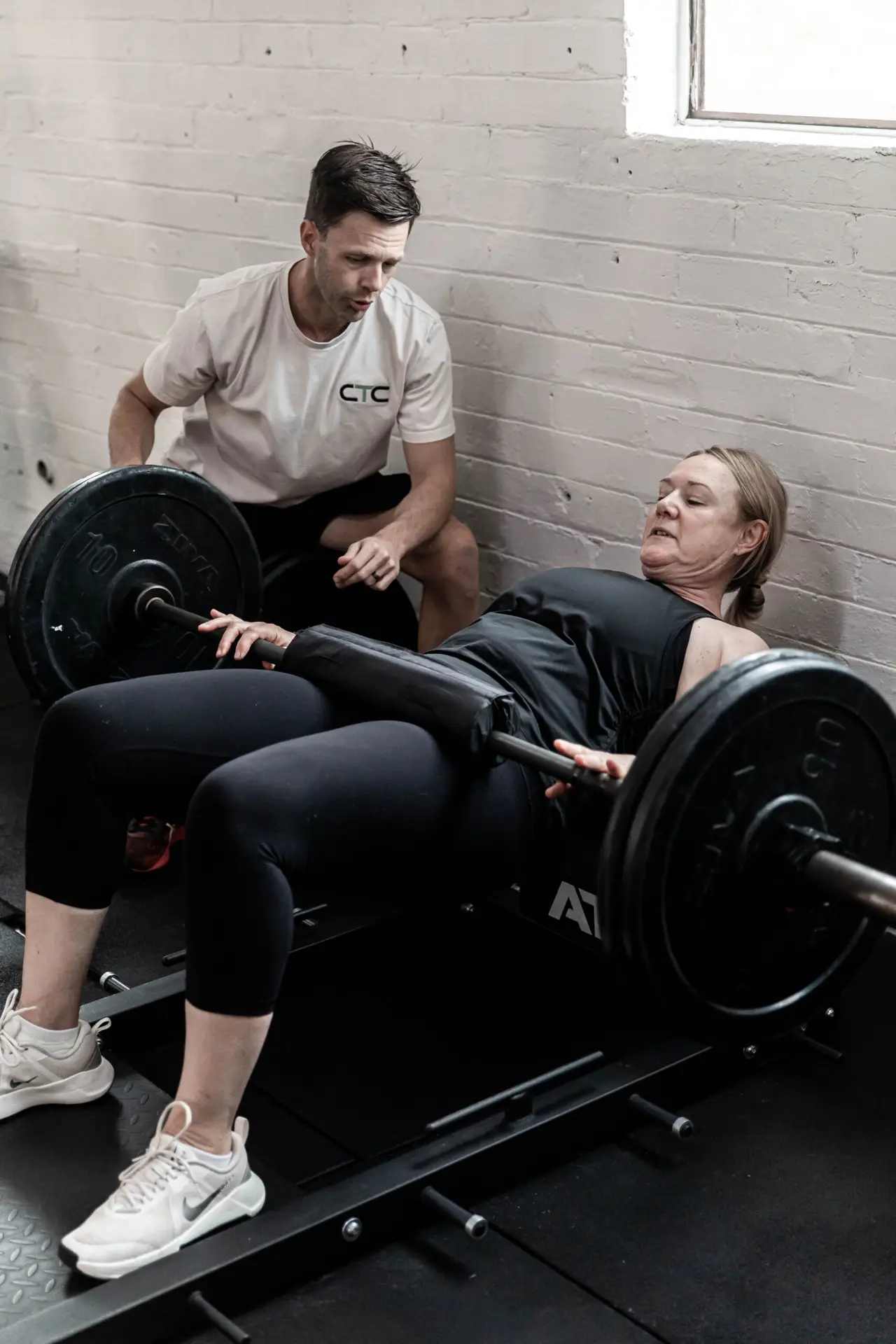
Bone adapts to the load placed on it. Heavy, well coached strength training is one of the few things shown in trials to increase bone density at the spine in postmenopausal women and hold the hip steady, while women doing only light exercise kept losing bone.
The clearest evidence comes from Queensland. The LIFTMOR trial, run at Griffith University and published in 2018, took 101 postmenopausal women with low bone mass, average age 65, and split them into two groups. One did a gentle home program. The other did 30 minutes of supervised heavy lifting twice a week for eight months: deadlifts, back squats and overhead presses for 5 sets of 5 at above 85 percent of their one rep max, plus jumping chin ups with a landing.
The results are worth stating accurately, because they get exaggerated constantly. The lifting group gained 2.9 percent bone density at the lumbar spine while the home group lost 1.2 percent. At the neck of the hip, the lifting group gained 0.3 percent while the home group lost 1.9 percent. So the hip didn’t grow much. It stopped shrinking, in women whose bones were already thinning. The lifting group also improved on every measure of physical function, and the training was well tolerated under close supervision.
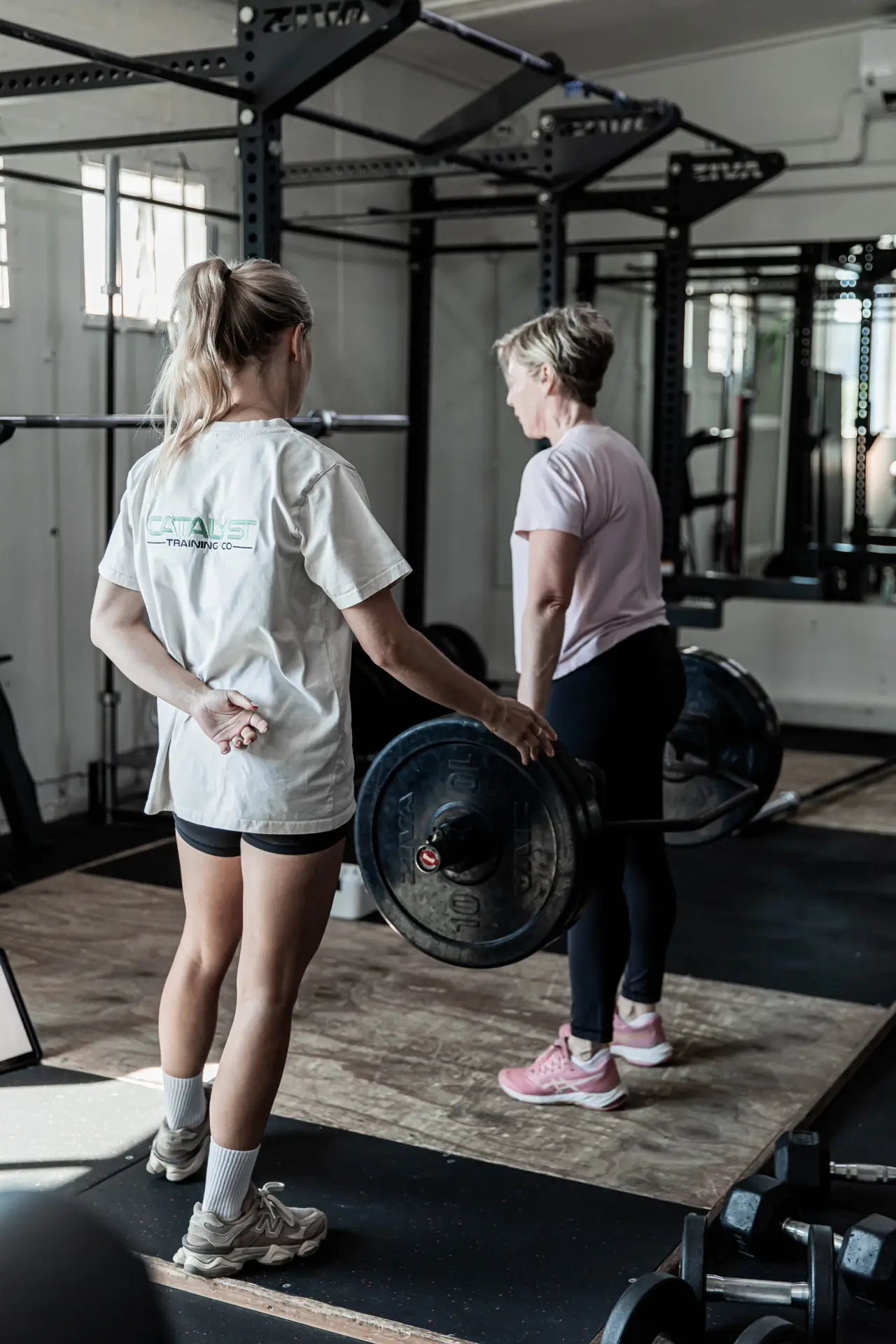
Exercise and Sports Science Australia now recommends progressive, high intensity resistance training, working up to around 80 to 85 percent of your one rep max, for preventing and managing osteoporosis. The important word is progressive. Their guidance has beginners building up over their first sessions rather than starting heavy, with technique coming first.
A diagnosis of osteopenia or osteoporosis doesn’t rule out heavy lifting. It means you should be screened first and supervised by someone qualified. That’s how LIFTMOR was run, and it’s how it should be run anywhere.
Can strength training help with menopause and mood?
Lifting won’t restore oestrogen, and anyone who tells you it will is selling something. What it does is push back against many of the consequences of losing it: less muscle, weaker bones, changes in body composition and blood sugar control, and low mood.
On mood, the evidence is better than most people expect. A 2018 analysis in JAMA Psychiatry pooled 33 randomised trials and found resistance training significantly reduced depressive symptoms in adults, regardless of their health status or how much training they did.
Plenty of women describe something harder to measure as well. Menopause can make it feel like your body is happening to you. Getting measurably stronger, week after week, is one of the few things that reliably hands some of that control back.

You can’t lift your way out of menopause. You can come out the other side stronger than you went in.
How should women over 40 lift weights?
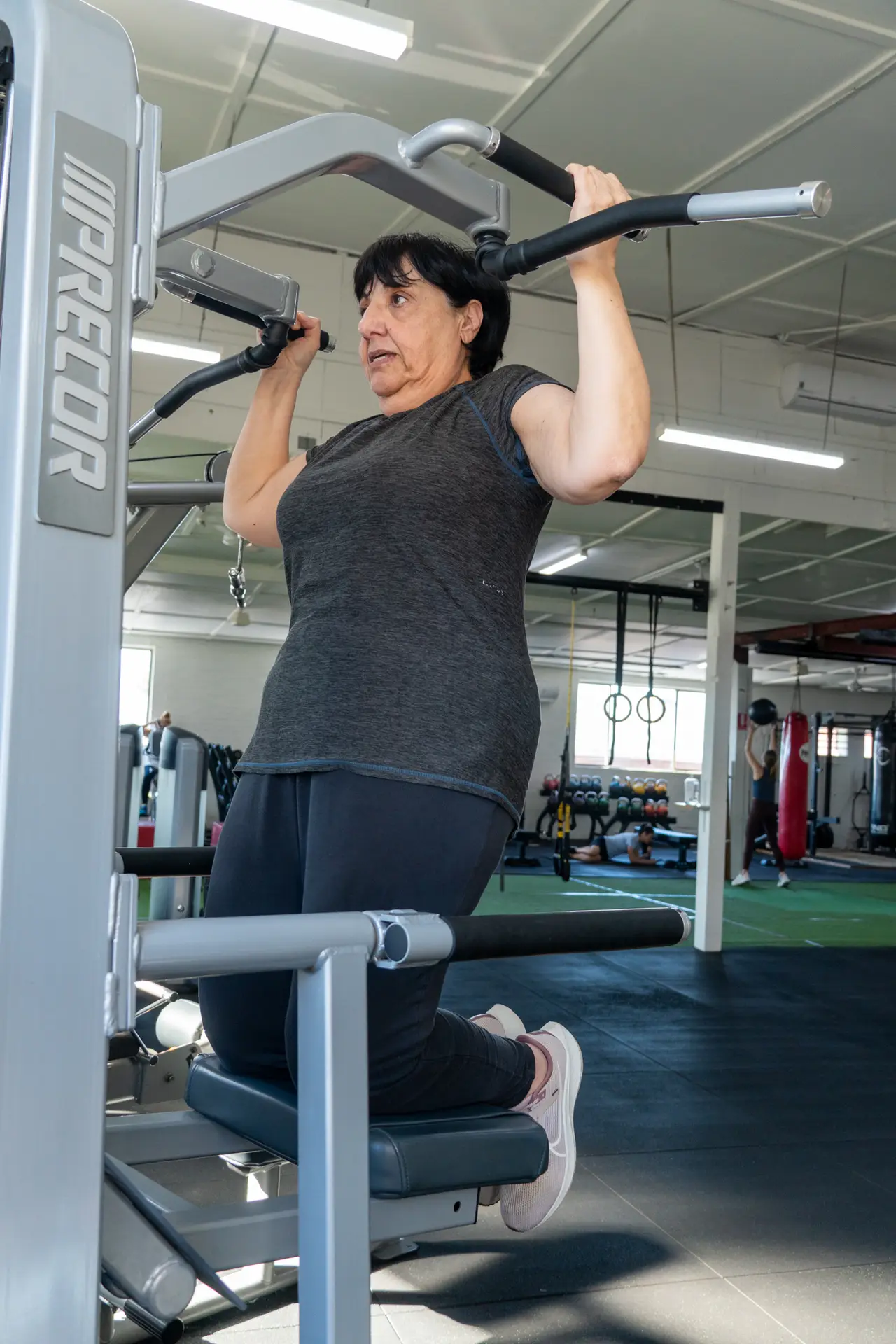
At least two strength sessions a week, built around big movements like squats, hinges, presses, pulls and carries, with the load going up gradually as you get stronger. Start lighter than you think, learn the technique properly, then make it genuinely challenging.
The Australian Government’s physical activity guidelines already recommend muscle strengthening activity on at least two days a week. Most adults don’t get there. Here’s what makes those two days count.
- Train the big patterns. Squat, hinge, push, pull and carry. They load the hips and spine, where bone matters most, and they’re the movements everyday life is made of.
- Make it progressively harder. A little more weight, one more rep, better control. With anabolic resistance, staying comfortable is the one approach that reliably doesn’t work.
- Earn the heavy weights. Build up over weeks, not sessions. Technique first, then load.
- Get screened if anything is going on. Joint pain, old injuries, low bone density, blood pressure or heart conditions. A proper screen means you train around them instead of being scared of them.
- Recover like it matters. Poor sleep and stress hit harder through perimenopause. Two or three sessions you recover from beat five that leave you flattened.
- Eat enough protein. Muscle isn’t built from nothing. A decent serve at every meal, especially the light ones, is a simple place to start.
And finish most sessions feeling like you had a little left. The goal is to still be training in five years, not to be wrecked on Thursday.
For more on the fundamentals, read our guides to the key principles of strength training for women and why strength training matters for long term health.
What this looks like at Catalyst
Everything above is the reason we’re building STRONG:40+.
It’s a small group strength program for women 40 to 65, run in our gym at 115 Avoca Street, Randwick. The group is capped on purpose, so a coach can genuinely watch your lifts. Everyone is screened before their first session, so knees, shoulders, backs and bone density are planned for from day one rather than discovered in week three. The training runs as a 12 week block, starting light enough to learn properly and building to lifts that are genuinely challenging, and your strength is retested along the way so you can see the change in numbers, not just feel it.
It isn’t a class where you follow along at the back. It’s coached, heavy enough to matter, and built around what actually changes for women after 40. If you’d rather start lifting with a coach right now, our small group training in Randwick runs every week.
Common questions
Will lifting heavy weights make me bulky?
No. Building large, bulky muscle takes years of very specific training and eating, and it is harder still after 40. What most women notice instead is that they look firmer, clothes sit differently and everyday things feel easier.
Is it safe to lift weights if I have osteopenia or osteoporosis?
For most women, yes, and it is one of the most useful things you can do. In the LIFTMOR trial, postmenopausal women with low bone mass lifted above 85 percent of their one rep max twice a week and it was well tolerated. The conditions matter: get screened first, build up gradually and lift under qualified supervision.
How often should women over 40 do strength training?
At least two days a week, which is the Australian guideline for adults. Research suggests the biggest benefit comes from around 30 to 60 minutes of strength work a week, so two or three focused sessions is plenty for most people.
Is strength training or cardio better for women over 40?
You need both, and they do different jobs. Australia's physical activity guidelines recommend aerobic activity most days plus muscle strengthening on at least two days a week. Cardio looks after your heart and lungs. Strength training is what protects muscle and loads bone, which walking and cycling do far less of.
How long does it take to see results from strength training?
Strength usually improves within the first few weeks, partly because you are learning the movements, and keeps building with steady progression. Muscle size takes longer, and bone slowest of all: the LIFTMOR trial measured its bone density changes after eight months of twice weekly training.
Is it too late to start lifting weights in your 50s or 60s?
No. In a 1990 study, frail adults aged 86 to 96 increased their leg strength by an average of 174 percent in eight weeks. Muscle and bone keep responding to training at every age. Starting later just means starting sensibly.
Do I need to be fit before I start?
No. That is what the first weeks are for. A good program meets you where you are, teaches the movements with light weights and builds from there.
STRONG:40+ · Coming soon to Randwick
Tell us where you’re starting from.
A small, coached strength group for women 40 to 65. Places are capped, so register your interest through our enquiry form and choose Small Group Training when it asks how we can help.
Enquire NowWomen 40 to 65 · Randwick · Limited places
- Volpi E, Nazemi R, Fujita S. Muscle tissue changes with aging. Current Opinion in Clinical Nutrition and Metabolic Care, 2004.
- Greendale GA et al. Bone mineral density loss in relation to the final menstrual period, Study of Women's Health Across the Nation (SWAN). Journal of Bone and Mineral Research, 2012.
- Leong DP et al. Prognostic value of grip strength, the PURE study. The Lancet, 2015.
- Momma H et al. Systematic review and meta analysis of muscle strengthening activity and mortality. British Journal of Sports Medicine, 2022.
- Fiatarone MA et al. High intensity strength training in nonagenarians. JAMA, 1990.
- Watson SL et al. The LIFTMOR randomised controlled trial. Journal of Bone and Mineral Research, 2018.
- Beck BR et al. ESSA position statement on exercise prescription for the prevention and management of osteoporosis. Journal of Science and Medicine in Sport, 2017.
- Gordon BR et al. Meta analysis of resistance exercise training and depressive symptoms. JAMA Psychiatry, 2018.
- Australian Government Department of Health, Disability and Ageing. Physical activity recommendations for adults 18 to 64.
Enquire now.
Interested in joining, or have a question? Fill in the form and one of our team will be in touch shortly.