The Lowdown · Strength after 40
Strength training after 40: the complete guide
Muscle starts slipping away in your thirties and speeds up from there. Here is what the research says about lifting after 40, how often to train and how to start properly.
Somewhere in your forties the body quietly changes the rules. Muscle gets harder to keep, recovery takes longer, and the training that worked at 30 stops working quite as well. The good news is that the fix is well understood, and it isn’t complicated.
This guide covers what changes after 40, whether lifting is safe, how often to train, what good training looks like and what results to expect. Over the coming weeks we’ll go deeper on each part in its own post.
Strength training after 40 is safe, effective and one of the best things you can do for the next 40 years. Two or three coached sessions a week, getting gradually heavier, rebuilds muscle and strength at any age and is linked to lower risk of early death, heart disease and diabetes.
| What the research found | The number | Source |
|---|---|---|
| Muscle inactive adults lose each decade, from about age 30 | 3 to 8 percent | Volpi et al., 2004 |
| Lean muscle added by around ten weeks of strength training | About 1.4kg | Westcott, 2012 |
| Lower risk of early death with regular muscle strengthening | 10 to 17 percent | British Journal of Sports Medicine, 2022 |
| Weekly strength work linked to the biggest benefit | 30 to 60 minutes | British Journal of Sports Medicine, 2022 |
| Strength sessions a week recommended for Australian adults | 2 or more | Australian Government guidelines |
Why does strength matter more after 40?
Because muscle quietly goes if you don’t use it, and the loss speeds up with every decade. Inactive adults lose roughly 3 to 8 percent of their muscle each decade from about 30, along with a drop in resting metabolism and a gain in body fat. Strength training is the most effective way we have to stop it.
You rarely notice it year to year. You notice it when your back complains after gardening, the stairs feel steeper, or the jeans fit differently even though the scales haven’t moved. Muscle isn’t about how you look. It’s what clears sugar from your blood after a meal, keeps your metabolism ticking over, and carries you through the next 40 years.
The long term numbers are hard to ignore. A 2022 review in the British Journal of Sports Medicine pooled 16 large studies and found people who did regular muscle strengthening had a 10 to 17 percent lower risk of dying early, along with lower rates of heart disease, cancer and diabetes. The biggest benefit came at around 30 to 60 minutes a week. That’s two good sessions, not a second job.
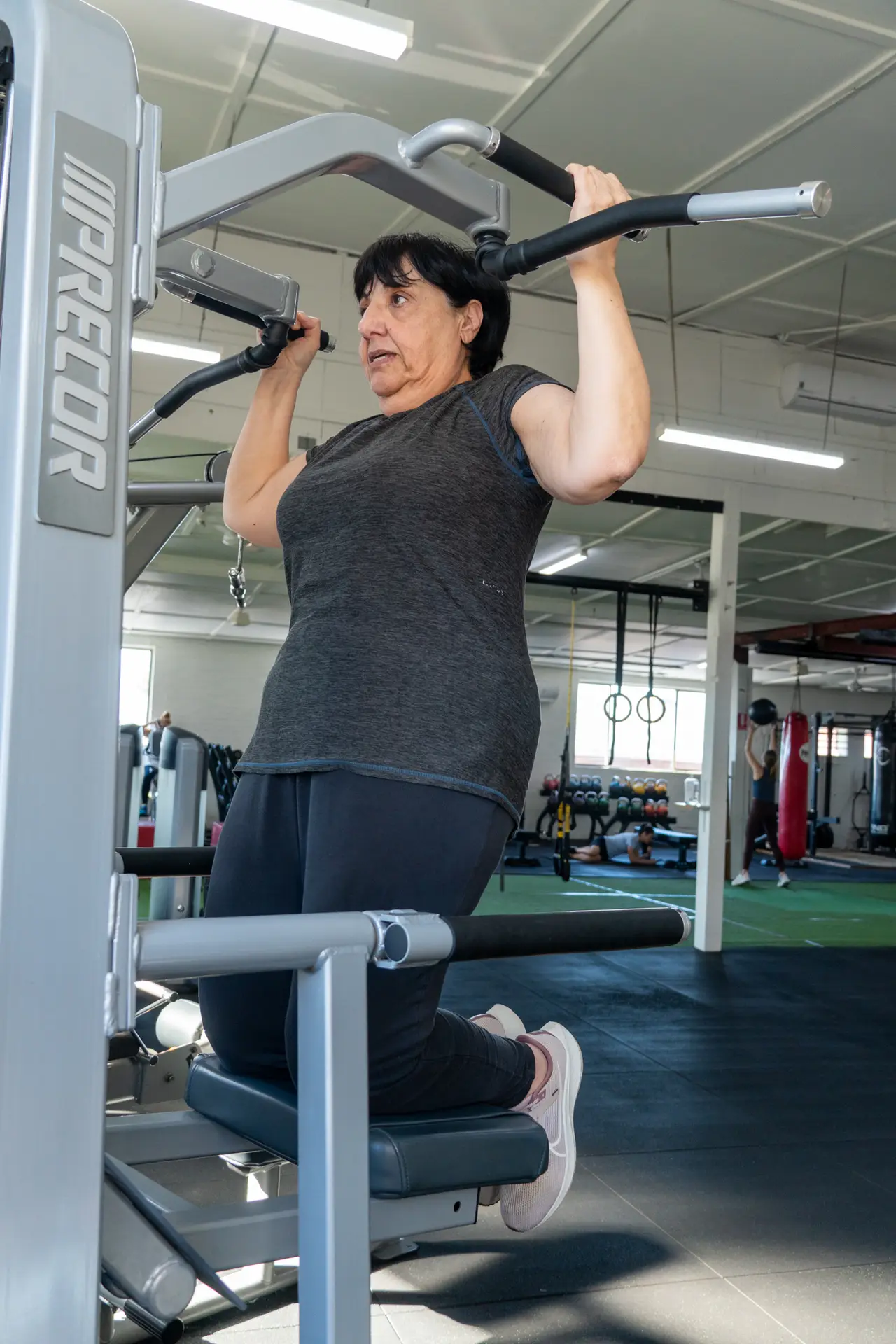
Is it safe to start lifting weights after 40?
Yes, when it’s coached and progressed sensibly. Even in older adults, a Cochrane review of 121 trials and 6,700 people found strength training substantially improved strength and made everyday tasks easier. Serious problems were rare, and none were directly linked to the exercise.
The safety comes from how it’s done, not from keeping the weights tiny. Start with a level you can control, learn the movements properly, then add load a little at a time. The most common side effects are sore muscles and achy joints in the first weeks, which a good coach plans around.
If you have a heart condition, high blood pressure, a joint replacement or a recent injury, get cleared by your GP and tell your coach before you start. It rarely rules training out. It changes how we plan it.
How often should you strength train after 40?
Two or three sessions a week suits most people, with a rest day between them. Australia’s physical activity guidelines recommend muscle strengthening on at least two days a week for all adults, plus balance and mobility work on three or more days and 30 minutes of moderate activity on most days.
The plan you can keep for 12 months beats the perfect plan you quit in March. Two sessions you never miss will do more than four you manage for a fortnight.
What does good strength training look like after 40?
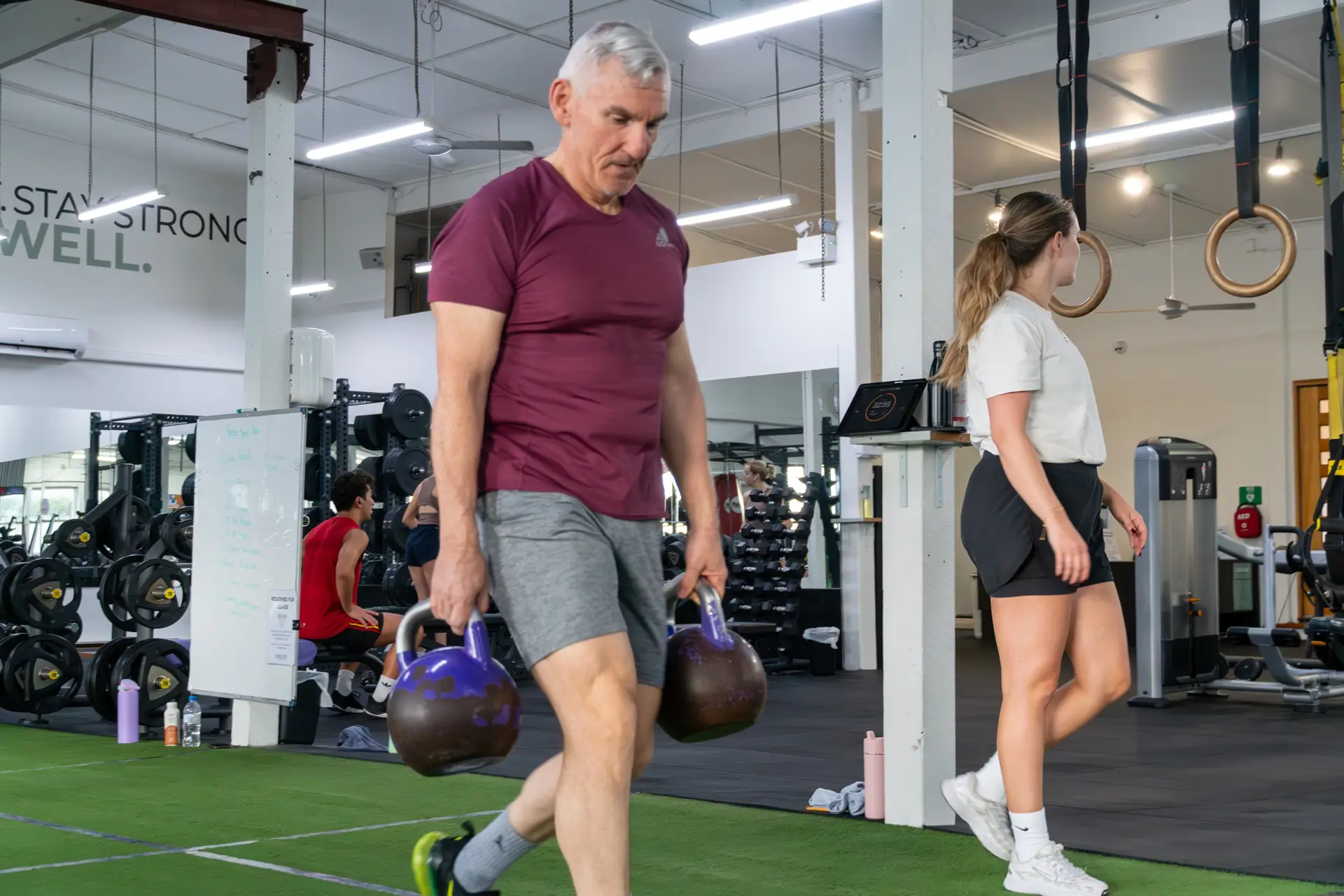
Good training after 40 is built on big movements, gradual progression and technique first. It looks less like a sweaty circuit class and more like a plan that gets a little harder every week.
- Train the big patterns. Squat, hinge, push, pull, single leg work and carries. They work the whole body and they’re the movements everyday life is made of.
- Make it progressively harder. A little more weight, one more rep, better control. Muscle needs a clear reason to change, and staying comfortable doesn’t give it one.
- Earn the heavy weights. Build up over weeks, not sessions. Technique first, then load.
- Follow a program, not random workouts. A plan that builds week on week beats turning up and guessing every time.
- Recover properly. Sleep, protein at every meal and a rest day between sessions are part of the training, not extras.
Finish most sessions feeling like you had a little left. The goal is still to be training in ten years.
What about women through perimenopause and menopause?
For women, strength training matters even more from the forties on. As oestrogen falls, bone and muscle are lost faster, and lifting is one of the few things shown to push back on both. In the LIFTMOR trial, postmenopausal women with low bone mass who lifted heavy under supervision twice a week increased their spine bone density. We’ve covered the research in detail in the science of strength training for women over 40, and our STRONG:40+ sessions are built specifically for it.
Should you do reformer pilates or strength training after 40?
Both, because they do different jobs. Strength training builds muscle and bone. Reformer pilates builds mobility, control and core stability. Together they keep you strong and moving well.
| What you want | Strength training | Reformer pilates |
|---|---|---|
| Build muscle and bone | Main tool | Supporting |
| Mobility and core control | Supporting | Main tool |
| Balance and fewer injuries | Strong | Strong |
At Catalyst, reformer pilates runs in the same building as the gym, in small classes with the instructor right beside you, so many members do a mix of both across the week.
How long until you see results?
Most people feel stronger within four to six weeks of consistent training. A review in Current Sports Medicine Reports found around ten weeks of strength training can add about 1.4kg of lean muscle, raise resting metabolism by about 7 percent and take off about 1.8kg of fat.
The early wins come fast because your nervous system adapts first: you get better at using the muscle you already have. The lasting change comes from staying consistent for months, and that’s where coaching and a gym you actually enjoy turning up to make the difference.
What should you look for in a gym after 40?
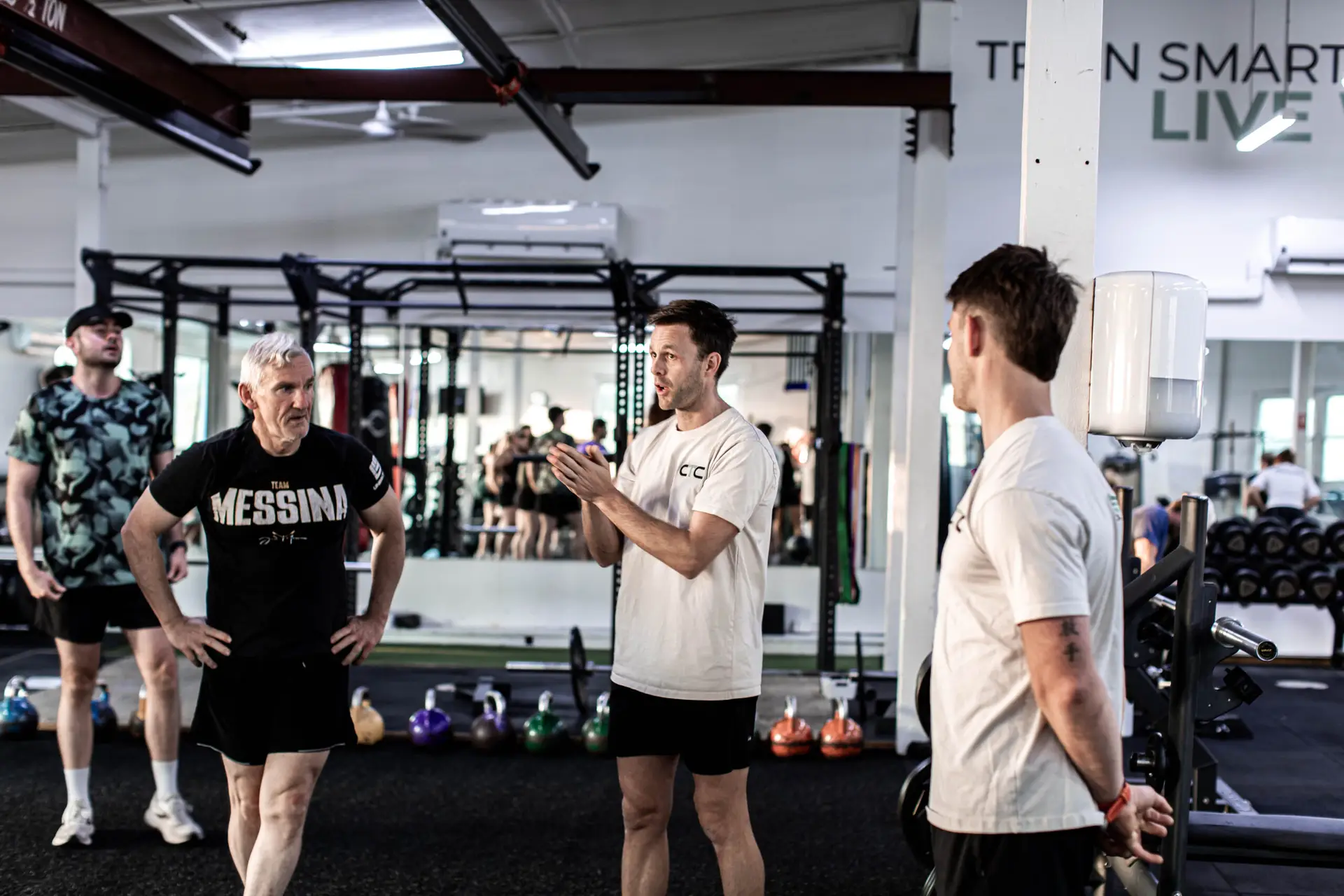
Look for qualified coaches on the floor, capped numbers so you’re never queuing for equipment, real programming built around your history, and a gym where people like you train.
- Coaches on the floor, not a card on the wall. Someone who can adjust a movement for your knees or shoulders on the spot.
- Capped numbers. Many gyms sell as many memberships as they can. When the floor is packed you wait for racks and cut sessions short.
- A program, so each week builds on the last instead of starting from scratch.
- People like you. If everyone is 22 and training for a photo shoot, you probably won’t keep going.
What this looks like at Catalyst
Catalyst Training Co is a coached training gym at 115 Avoca Street, Randwick, built around exactly this. Strength training, reformer pilates and exercise physiology sit under one membership in one building, and our members range from their 40s to well past 60, all training for the same thing: to be strong now, and strong at seventy.
You can train with us through coached small group sessions, one to one personal training or a membership that combines both with pilates and open gym. We cap our memberships on purpose, so you’re never waiting for a rack.
Common questions
Is it too late to start strength training after 40?
No. Muscle keeps responding to training at every age. In a 1990 study, adults aged 86 to 96 increased their leg strength by an average of 174 percent in eight weeks. Starting in your forties or fifties puts you well ahead, as long as you start sensibly and build up gradually.
How many days a week should you strength train after 40?
Two or three days a week suits most people. Australia's physical activity guidelines recommend muscle strengthening on at least two days a week for all adults, and that is where most of the research benefits show up. Leave a day between sessions to recover.
Will lifting weights hurt my joints?
Done well, it usually helps them. A Cochrane review of 121 trials found people with osteoarthritis reported less pain after progressive strength training. The keys are good technique, sensible progression and working around any injury rather than through it.
Should I do strength training or cardio after 40?
Both. Cardio looks after your heart and lungs. Strength training protects muscle and bone, which walking, running and cycling do far less of. Most people do best with two or three strength sessions a week plus regular aerobic activity.
How quickly will I see results?
Most people feel stronger within the first four to six weeks. One review found around ten weeks of strength training added about 1.4kg of lean muscle and lifted resting metabolism by about 7 percent. Visible change usually takes around three months of consistent training.
Where can I do coached strength training in the Eastern Suburbs?
Catalyst Training Co at 115 Avoca Street, Randwick runs coached small group strength sessions, one to one personal training, reformer pilates and exercise physiology under one membership, with coaches on the floor every session.
Train with us in Randwick
See how it feels for a week.
Seven days of full access to our gym at 115 Avoca Street: coached strength sessions, reformer pilates and open gym, with coaches on the floor every day. You won’t be the only one over 40 on the floor.
$79 · 7 days of full access · No lock in
- Volpi E, Nazemi R, Fujita S. Muscle tissue changes with aging. Current Opinion in Clinical Nutrition and Metabolic Care, 2004.
- Westcott WL. Resistance training is medicine: effects of strength training on health. Current Sports Medicine Reports, 2012.
- Momma H et al. Muscle strengthening activities are associated with lower risk and mortality in major non communicable diseases. British Journal of Sports Medicine, 2022.
- Liu CJ, Latham NK. Progressive resistance strength training for improving physical function in older adults. Cochrane Database of Systematic Reviews, 2009.
- Fiatarone MA et al. High intensity strength training in nonagenarians. JAMA, 1990.
- Watson SL et al. The LIFTMOR randomised controlled trial. Journal of Bone and Mineral Research, 2018.
- Australian Government Department of Health, Disability and Ageing. Physical activity recommendations for adults 18 to 64 years.
Enquire now.
Interested in joining, or have a question? Fill in the form and one of our team will be in touch shortly.