Strength after 40 · Part 2
How often should you strength train after 40? A sample week
The research points to two or three sessions a week. Here is how to fit them into a real week, with work, family, walking and recovery around them.
Most people over 40 should strength train two or three days a week, with a rest day between sessions. Australia’s physical activity guidelines recommend at least two days of muscle strengthening for all adults, and a 2015 review of 25 trials found two sessions a week gave the biggest strength gains.
Knowing you should lift is the easy part. Fitting it into a week with work, kids, travel and a body that needs a bit more recovery than it used to is where most plans fall over. This is how we’d set it up.
What does the research say about how often to train?
Two sessions a week is the proven minimum, and three works well if you recover from it. A 2015 review in Sports Medicine looked at 25 trials and found these settings gave the biggest strength gains. The people studied were over 65, so if anything, someone in their forties or fifties will respond at least as well.
| Training setting | Best result in the research | What it means for you |
|---|---|---|
| Sessions a week | 2 | Two good sessions beat four rushed ones |
| Sets per exercise | 2 to 3 | Enough work without wiping you out |
| Reps per set | 7 to 9 | Heavy enough that the last reps are hard |
| Intensity | 70 to 79 percent of your max | Built up to over weeks, not day one |
| Rest between sets | 60 to 120 seconds | Time to breathe and reset |
| Length of program | 50 to 53 weeks | The biggest gains came from training for a year |
The authors flag that many of the trials were small, so treat these as a good starting point, not a rule. They line up closely with the Australian guidelines and with what we see on the floor.
What does a good week of training look like after 40?
Two or three strength sessions on non consecutive days, something for mobility and control like reformer pilates, daily walking and at least one genuine rest day. Here’s a sample week we’d give a 45 year old who is new to lifting.
| Day | Session | Why it’s there |
|---|---|---|
| Monday | Strength A, 45 to 60 minutes | Squat, push, pull, carry. The main session of the week |
| Tuesday | Walk 30 minutes | Heart, lungs and recovery |
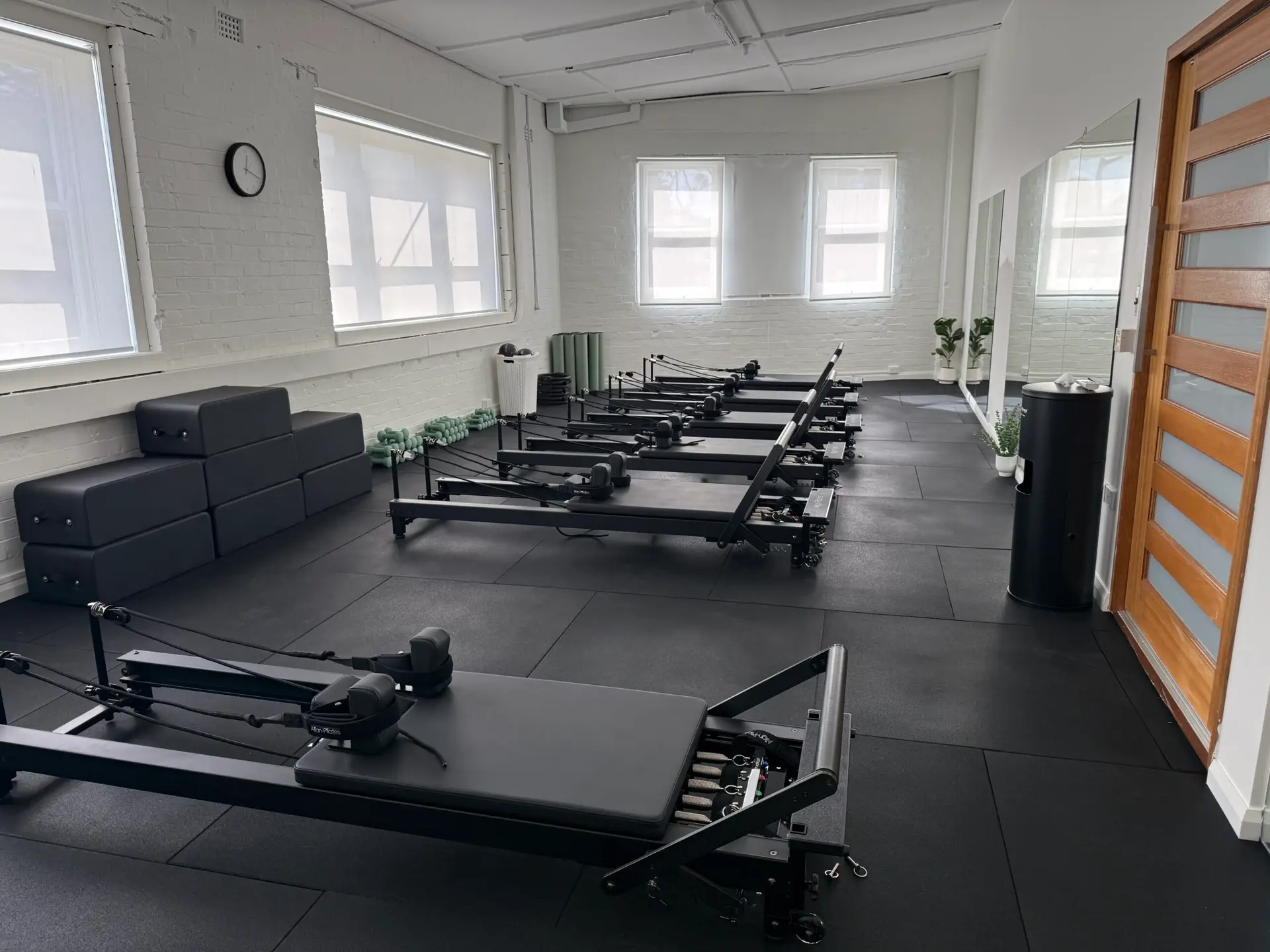
| Wednesday | Reformer pilates | Mobility, core control and balance |
| Thursday | Strength B, 45 to 60 minutes | Hinge, single leg work, press, row |
| Friday | Walk, run or swim 30 minutes | Easy aerobic work |
| Saturday | Optional strength C or a long walk | Add once two sessions feel easy to recover from |
| Sunday | Rest | Recovery is when the strength is built |
Busy week? Keep the two strength sessions and let everything else flex. If you only manage one strength session, don’t try to double up the next week. Just get the next one done.
What goes into each strength session?
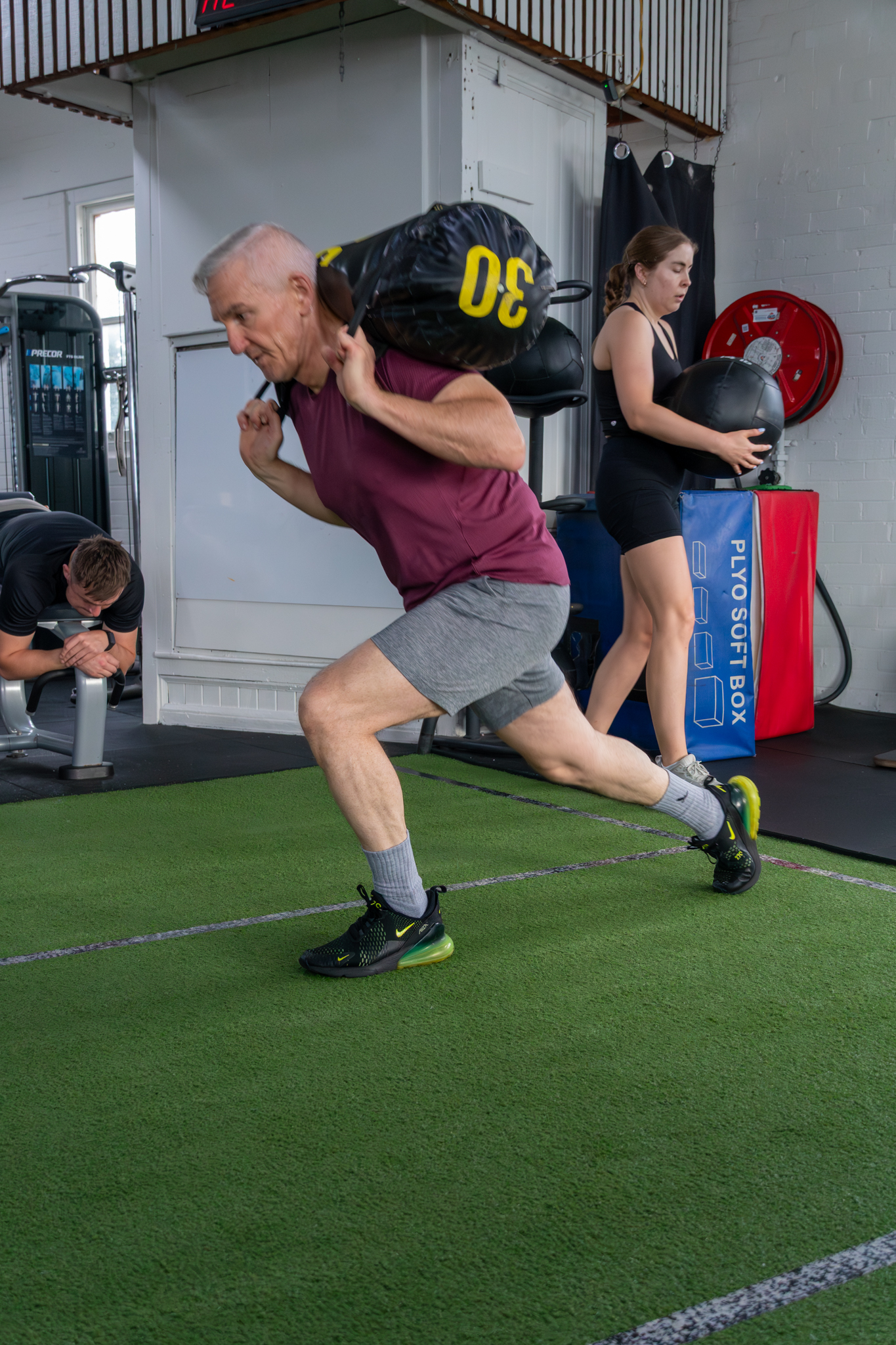
Four to six exercises that cover the big movement patterns, done for two to three sets each, after a short warm up. Over the week you want every pattern trained at least once, and most of them twice.
- Squat: goblet squat, leg press or barbell back squat.
- Hinge: deadlift, kettlebell deadlift or hip thrust.
- Push: dumbbell bench press, push up or overhead press.
- Pull: seated row, lat pulldown or chin up.
- Single leg: step up, split squat or reverse lunge.
- Carry: farmer’s walk with dumbbells or kettlebells.
Each week, try to do a little more than last time: one more rep, a slightly heavier weight, or the same weight with better control. That’s progression, and it’s what drives the results.
Why do rest days matter more after 40?
Because strength is built between sessions, not during them, and recovery takes a little longer than it did at 25. A day between your main strength sessions lets muscles repair, joints settle and energy come back for the next one.
Rest doesn’t mean doing nothing. Walking, swimming, gardening and pilates on your off days keep you moving without adding to the load. If you’re still sore or flat two days later, the session was too big, not you too weak.
When should you add a third session?
Add a third strength session when two feel easy to recover from: you sleep well, you’re not sore going into the next session, and the weights have been going up steadily for a couple of months. If any of those slip, go back to two.
Plenty of people never need a third. Two well coached sessions a week, kept up for a year, will change how you move and feel. If youIf you’re unsure whether lifting is right for you right nowrsquo;re unsure whether lifting is safe for you, start with is it safe to start lifting weights after 40, and the full picture is in our complete guide to strength training after 40.
What this looks like at Catalyst
Many of our members build a week like the one above, all under one membership at 115 Avoca Street, Randwick. Strength sessions run as coached small group training through the week, reformer pilates is in the same building, and the open gym is there for anything extra. If you want a week built entirely around you, personal training does exactly that. See our memberships to find the mix that fits.
Common questions
How many days a week should you strength train after 40?
Two or three days a week suits most people. Australia's physical activity guidelines recommend muscle strengthening on at least two days a week for all adults, and a review of 25 trials in older adults found two sessions a week gave the strongest strength gains.
Is strength training once a week enough?
Once a week is far better than nothing and will hold some strength, but two sessions is the minimum the guidelines recommend and where most of the research benefits show up. If one session is all you can manage right now, start there and add a second when you can.
How long should a strength session be?
Around 45 to 60 minutes, including a warm up. A large review linked about 30 to 60 minutes of muscle strengthening a week to the biggest reduction in risk of early death, so two focused sessions covers it.
Can I strength train on back to back days?
You can, if the sessions work different areas or one is much lighter. Most people over 40 recover better with a day between their main strength sessions, using that day for walking, pilates or mobility.
How many sets and reps should I do?
Two to three sets of seven to nine reps per exercise gave the biggest strength gains in a 2015 review, with weights around 70 to 79 percent of your maximum. Beginners start lighter and build up to that.
Try the week for real
Train the week, not just read about it.
Seven days of full access to our gym in Randwick: coached strength sessions, reformer pilates and open gym. A coach will help you set up a week that fits your life.
$79 · 7 days of full access · No lock in
- Australian Government Department of Health, Disability and Ageing. Physical activity recommendations for adults 18 to 64 years.
- Borde R, Hortobagyi T, Granacher U. Dose response relationships of resistance training in healthy old adults. Sports Medicine, 2015.
- Momma H et al. Muscle strengthening activities are associated with lower risk and mortality in major non communicable diseases. British Journal of Sports Medicine, 2022.
- Liu CJ, Latham NK. Progressive resistance strength training for improving physical function in older adults. Cochrane Database of Systematic Reviews, 2009.
Enquire now.
Interested in joining, or have a question? Fill in the form and one of our team will be in touch shortly.